
Owens Valley
Nüümü/Newe (Owens Valley Paiute and Shoshone). Peoples intricately and intimately tied to Water (Paya).

-
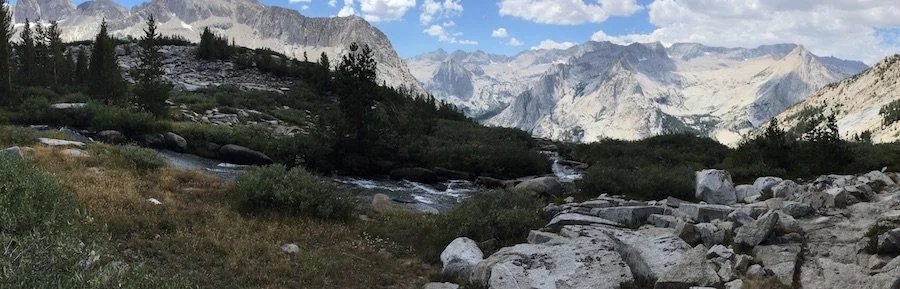
The Nüümü and Newe (Owens Valley Paiute) are peoples born of paya (water). Oral histories, passed down from generation to generation, tell of the importance of paya and its positionality creation. The ancestors of Nüümü and Newe once lived upon the tops of the mountains like islands and then came down into the valley when the paya receded.
For the Nüümü and Newe, the relationship with this life-giving resource has always been reciprocal. Paya has multiple levels of meaning. The ancestors practiced irrigation with sophisticated sociopolitical organization, carefully managing the spread of paya across the landscape. This system utilized what was needed, but never more.
Paya was utilized for everyday livelihoods but also recognized as a spiritual and medicinal resource. Its purity was carefully protected. Paya was also at the center of intertribal connectivity among peoples throughout the Eastern Sierra and beyond.cIn addition to trade routes across the Sierra, Patsiata (Owens Lake) was itself a center for trade, bringing people from neighboring valleys and all the way from the coast to trade in salt, food, and other goods.
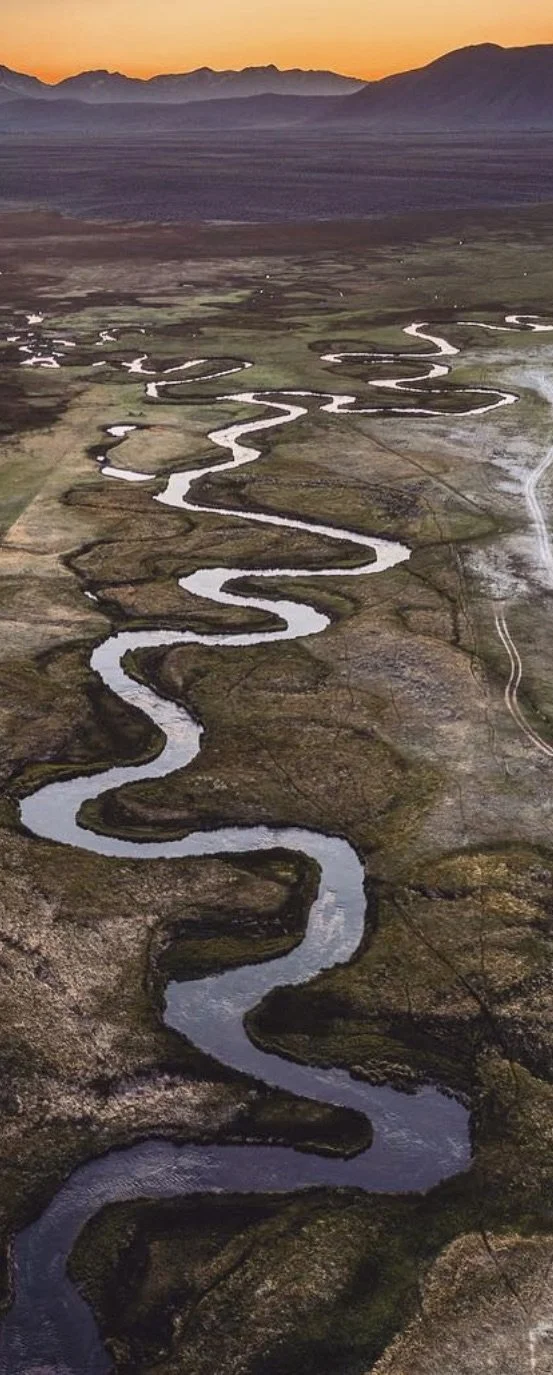
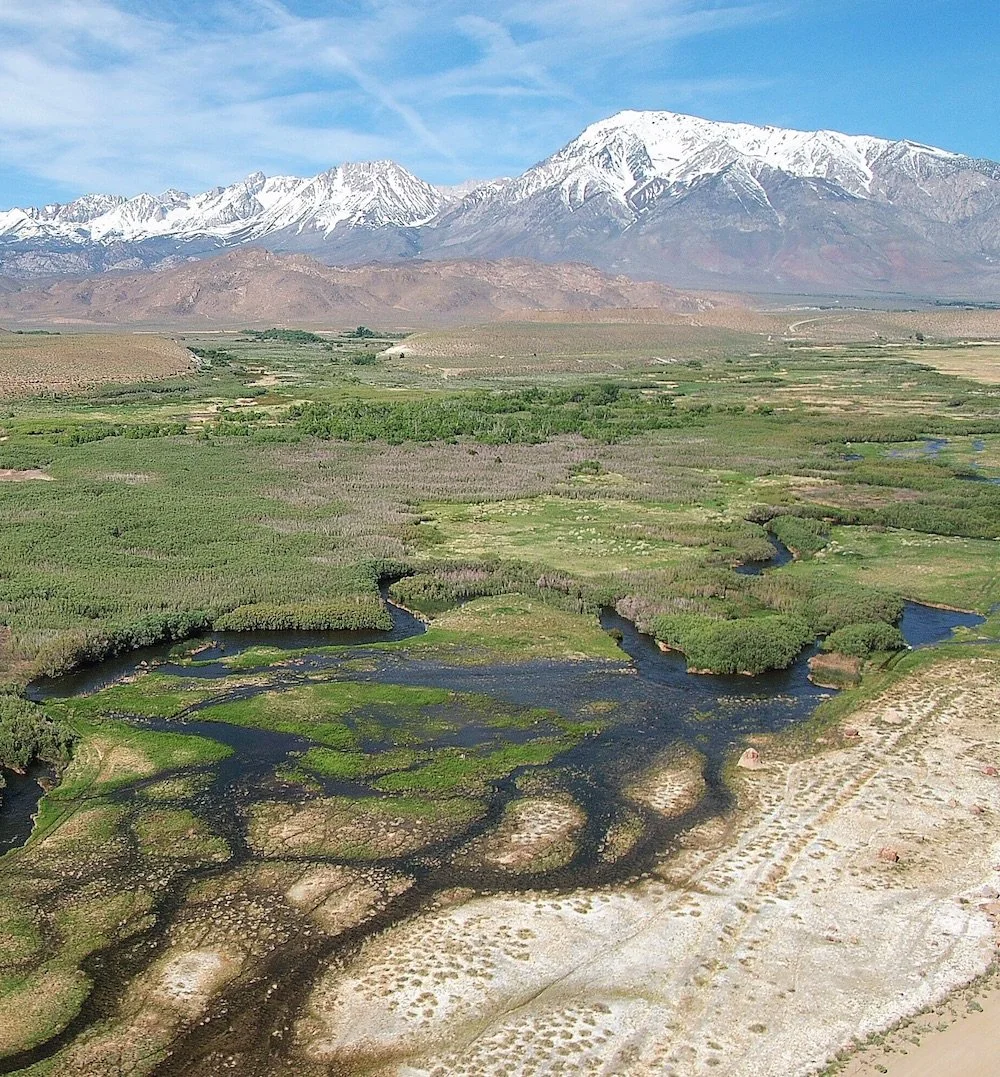
Utilizing streams from the Sierra Nevada, paya was spread across the land of Payahuunadü. This distribution of paya was central not only to the way of living but to the health of the flora and fauna inhabiting the valley. It was a practice of sustainable agriculture rooted in a reciprocal relationship with the environment. The elders continue to pass down stories that were passed down to them, describing a lush place, with areas of marshland, fields of tall grasses, and tree cover throughout the entire valley. The people, the land, and the critters thrived amidst that abundance for millenia.
Summer homes and winter homes were constructed using available wood and woven materials. The Nüümü and Newe were (and still are) expert basket weavers. Skilled hunters sought deer, antelope, and rabbit using bow and arrow. The seeds of native grasses, grew taboose and nahativa were collected in addition to acorns, pine nuts, tubers, and larva. Small pupfish were abundant in the waters of Payahuunadü and were collected, dried in the sun, and in some cases stored in caches to provide sustinence for the winter season.
-
The Nüümü and Newe (Owens Valley Paiute and Shoshone) are peoples whose ways of being and knowing are intricately and intimately tied to paya (water). For millennia, the Nüümü and Newe have lived and thrived in Payahuunadü, ‘the land of flowing water’ (the Owens Valley), spreading this crucial resource across the land in order to sustain the plants and animals that sustain us in return.
Irrigation, utilizing paya from the streams that descend from the Sierra Nevada, was practiced in Payahuunadü for millennia prior to contact with white settlers. The Nüümü and Newe stewarded the valley’s resources and carefully harvested its seed concentrations in order to sustain the land while living upon it. Payahuunadü was a plentiful garden of taboose and nahativa, carefully cared for and worked upon for thousands of years. It nurtured life for countless generations. This was a longstanding, ecologically sustainable means of agricultural production.
The delicate balance of water and land use was interrupted when settlers came into the valley in the 19th century. Settlers did not recognize traditional forms of agriculture practiced by our ancestors and only saw land available for the taking. In 1870, an article noted the fertile nature of the soil in the valley (nourished by Paiute irrigation) and claimed that settlers would quickly transform it into “luxuriant gardens, orchards, and green fields.”
Settlers were quick to harness the existing networks of irrigation for their canal infrastructure and, within 50 years of contact with settlers, the distribution of water across Payahuunadü was changed forever.
Ranchers refused to appreciate the sophisticated systems that the Nüümü and Newe had in place for millenia. Instead, they only saw under-utilization and opportunity, which led over time to monocrop agriculture, seepage of water into otherwise un-irrigated plots, the draining of marshy areas, pollution of fresh water from stock runoff, the gradual recession of Owens Lake, and the destruction of native seed supplies, devastation to ecology and the practice of traditional way of life.
-
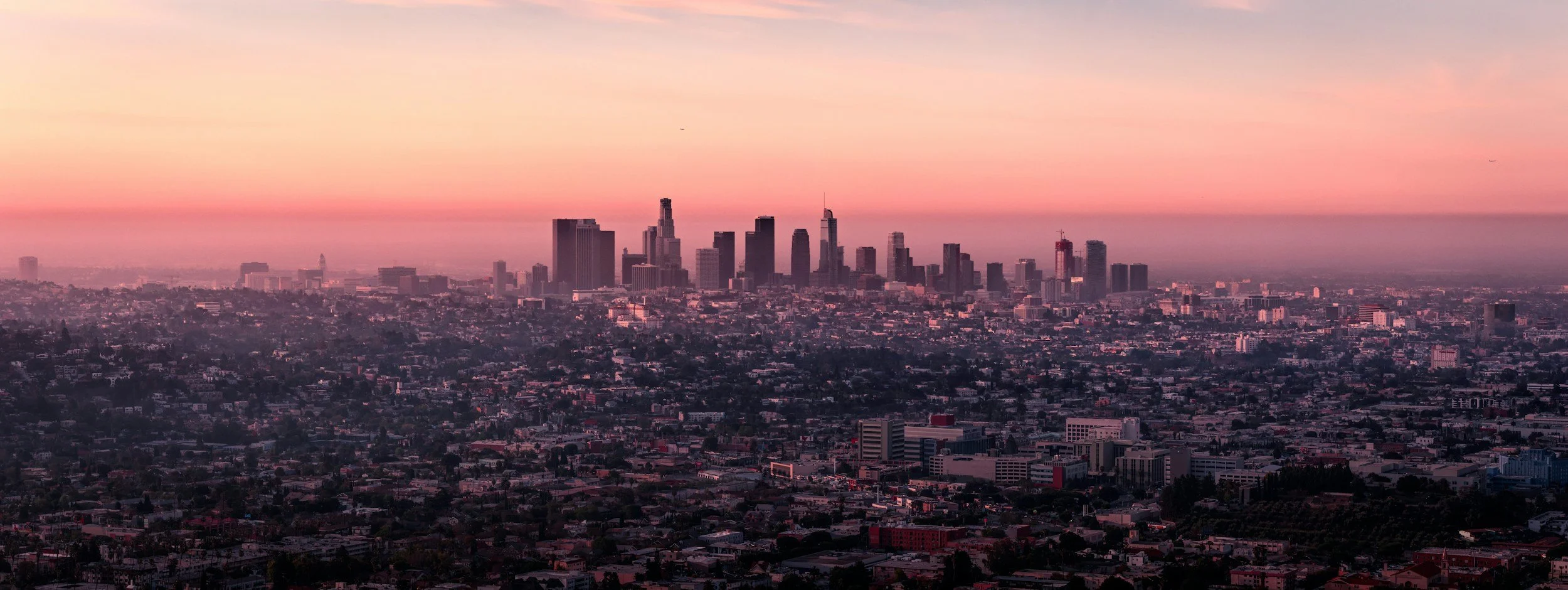
The City of Los Angeles would soon repeat the same pattern of displacement, overtaking existing water uses in order to provide for the City’s growing population. This time, at the start of the 20th century, it was the ranchers and settlers of the valley who were displaced as well as the Nüümü and Newe who lost their employment on the ranches. The City’s purchase of land and water rights throughout the valley allowed it to remove mass amounts of water from the landscape. Next, they turned to the lands held in trust for the Paiute by the federal government. By the end of the 1920s, it owned 95% of the private land and water rights in the valley. Shortly thereafter, surface water alone was not enough to sustain the booming city of Los Angeles, and so the City also began groundwater pumping.
As agricultural activities decreased due to land sales, many Nüümü and Newe who had turned to wage labor as a means of survival were left without work. The City of Los Angeles issued multiple reports between 1930 and 1936 regarding the “Indian problem” in the Owens Valley, some recommending relocation outside the valley. Eventually, the City of Los Angeles’ Department of Water and Power recommended relocation to three new homesites within the valley through a land exchange with the federal government.
-
The City of Los Angeles’ success largely depended on its deep interest in Payahuunadü. The City used the financial and relational resources then available to amass a heavy influence from Los Angeles to Washington D.C. The City’s vesting interest stemmed from the idea that all water then utilized for agriculture could instead be exported for the City’s benefit and expansion.
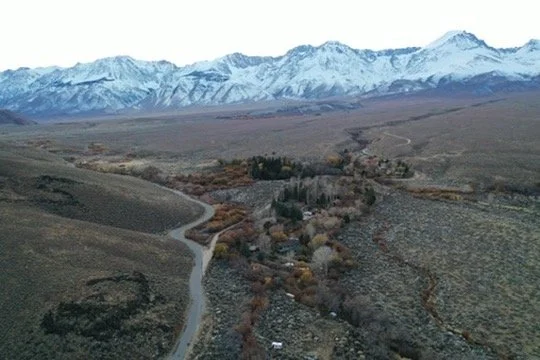
Thereon, the City moved forward with using its resources to consolidate the Nüümü and Newe people onto three reservations (Bishop, Big Pine, and Lone Pine) and exchange its lands with those held in trust by the federal government. In turn, this further limited the amount of water that was allowed to flow freely in Payahuunadü.
-
The Federal Reserved Indian Water Rights associated with the original 2,913.5 acres of land held in trust for the Nüümü and Newe Owens Valley Paiute occupied a total landbase of only 1,391.48 acres during the land “exchange.” Not transferred in the land exchange were. The water the Tribes are currently receiving and using for irrigation is only a contractual water right guaranteeing delivery by the Los Angeles Department of Water and Power. The Federal Reserved Indian Water Rights remain unresolved and are the basis for current negotiations.
[CHAPTER 114]
AN ACT
To authorize the Secretary of the Interior to exchange certain lands and water rights in Inyo and Mono Counties, California, with the city of Los Angeles, and for other purposes. Be it enacted by the Senate and House of Representatives of the United States of America in Congress assembled, That the Secretary of the Interior be, and he is hereby, authorized, in his discretion, to accept title on behalf of the United States to lands and water rights now owned and held by the city of Los Angeles in the counties of Inyo and Mono, State of California, if, in his judgment, the interests of the Indians in said counties will be benefited thereby; and in consideration therefor the said Secretary may issue a patent or patents to the said city of Los Angeles for lands, water rights, and buildings now held by the United States for the benefit of the Indians, provided that the lands, water rights, and buildings covered by the patent or patents shall not exceed in value the lands and water rights conveyed by the said city of Los Angeles to the United States: Provided, That the said Secretary may reserve the minerals of the lands conveyed to the said city and the said Secretary is authorized to accept conveyance by the said city of the lands and water rights, subject to a similar reservation in the city of the minerals of such lands, and in determining the relative value of the lands and water rights to be exchanged, consideration shall be given to any reservation made by either or both parties of any minerals or easements in the lands that may be exchanged. Sec . 2. No allotted or other lands covered by trust patent or other instrument containing restriction against alienation by the allottee shall be involved in any such exchange except with the consent of the allottees or their heirs. Any such allottees or their heirs are hereby authorized to relinquish to the United States any lands covered by such patents or other instruments and accept in lieu thereof assignments of land within the new Indian reservations which are hereby authorized to be established by the Secretary of the Interior out of any lands accepted by him pursuant to section 1 hereof: Provided, That any such Indian may receive an area of equal value to the area of the allotment relinquished by him and receive similar title to that relinquished should any of the lands accepted by the said Secretary be outside of the boundaries of the new reservations. Sec . 3. No tribal lands shall be involved in any such exchange except with the consent of a majority of the adult Indians entitled to the use thereof. All lands acquired pursuant to this Act, other than land to which title may be held by or in trust for individual Indians, shall be held by the United States in trust for the Indian tribe, band, or group concerned.
Approved, April 20, 1937.
[CHAPTER 121]
AN ACT
To amend the National Housing Act. Be it enacted by the Senate and House of Representatives of the United States of America in Congress assembled, That subsection (a) of section 6 of the National Housing Act, as amended, is amended to read as follows: “(a) The Administrator is authorized and empowered, upon such terms and conditions as he may prescribe, to insure banks, trust companies, personal finance companies, mortgage companies, building and loan associations, installment lending companies, and other such financial institutions, heretofore or hereafter approved by the Administrator as eligible for credit insurance, against losses which they may sustain as a result of loans and advances of credit, and purchases of obligations representing loans and advances of credit, made by them subsequent to the date this section takes effect and prior to July 1, 1939, or such earlier date as the President may fix by proclamation upon his determination that the emergency no longer exists, for the purpose of financing, by the owners of real property or by lessees thereof under a lease for a period of not less than one year, the restoration, rehabilitation, rebuilding, and replacement of improvements on such real property and equipment and machinery thereon which were damaged or destroyed by earthquake, conflagration, tornado, cyclone, hurricane, flood, or other catastrophe in the years 1935, 1936, 1937, 1938, or 1939, either on the same site or on a new site in the same locality where the damaged or destroyed property was located. The Administrator is authorized to grant insurance under this section, as amended, to any such financial institution up to 20 per centum of the total amount of loans, advances of credit, and purchases made by such financial institution for such purposes, and any insurance reserve accumulated by any such financial institution under section 2 of this title shall be applicable to the payment of any losses sustained by it as a result of loans, advances of credit, or purchases insured under this section.” Sec . 2. The third sentence of subsection (a) of section 2 of the National Housing Act, as amended, is amended to read as follows: “The total liability incurred by the Administrator for all insurance heretofore and hereafter granted under this section and section 6, as amended, shall not exceed in the aggregate $100,000,000.”
Approved, April 22, 1937.
[CHAPTER 122]
AN ACT
For payment of compensation to persons serving as postmaster at third- and fourth-class post offices. Be it enacted by the Senate and, House of Representatives of the United States of America in Congress assembled, That the proviso, following the appropriation for compensation to postmasters, contained in the Act approved March 1, 1921 (41 Stat., p. 1151; U. S. C., title 39, sec. 39), is hereby amended by adding after the words “unnecessary delay” at the end thereof the following: “A person who, upon the occurrence of a vacancy and pending the appointment of a postmaster or the designation of an acting postmaster, assumes and properly performs the duties of postmaster at any third- or fourthclass post office shall be allowed compensation as postmaster for the period of such service: Provided, That the Comptroller General of the United States, in the settlement and adjustment of accounts and claims for compensation for service heretofore rendered, but subsequent to June 30, 1930, is hereby authorized and directed to allow compensation as postmaster for service rendered under the circumstances and conditions hereinbefore prescribed.”
Approved, April 22, 1937.
-
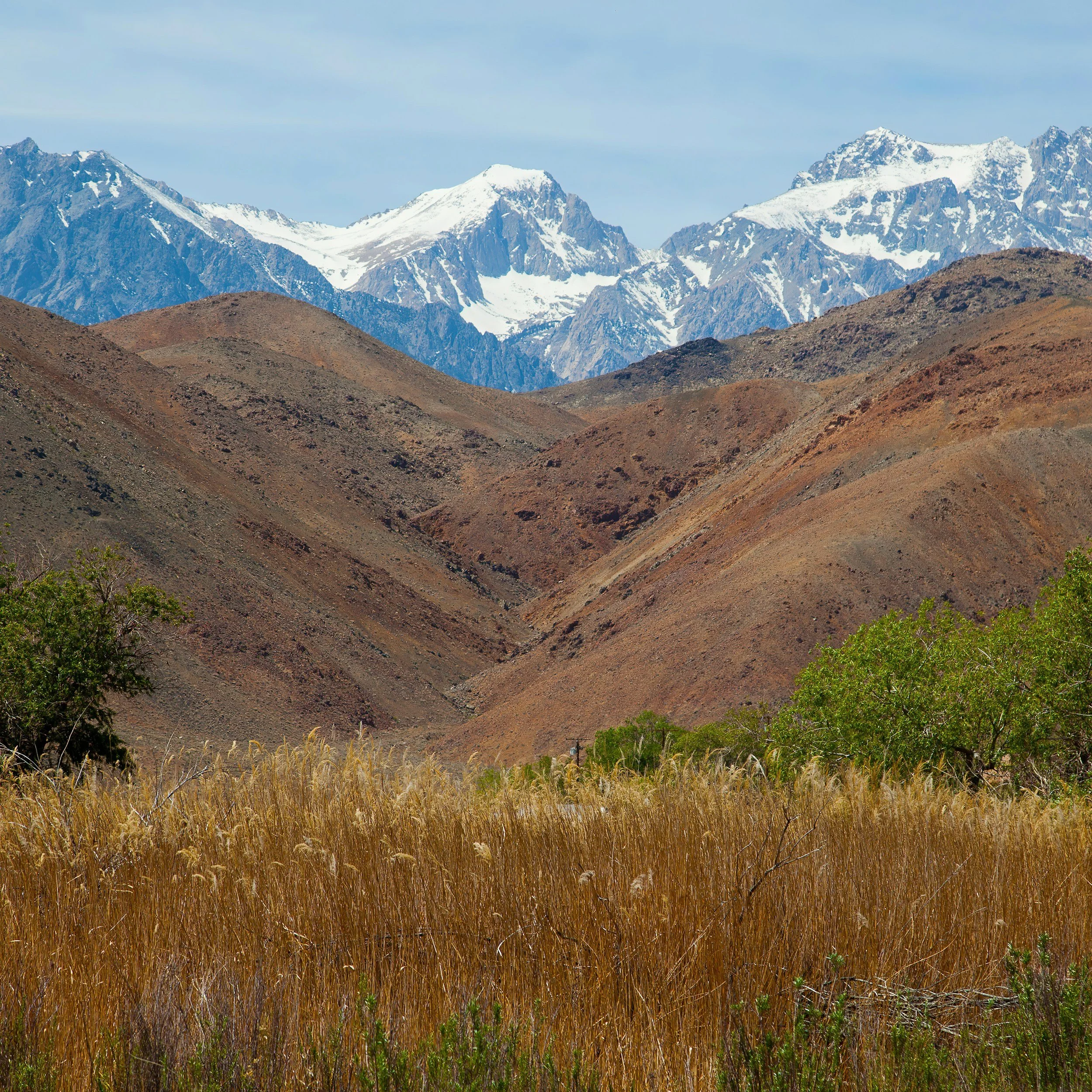
Drawn to water and gold of Payahuunadü – settlers entered the Owens Valley in the 1860s resulting in severe socioeconomic and environmental impacts upon Payahuunadü. Conflicts between ranchers and the Nüümü and Newe people eventually led to several brutal massacres and forced removal to Fort Tejon in 1863. When the ancestors made their way back to the valley, they had little option but to work as labor on the ranches in the valley.
The ancestors had always relied upon a large landbase to properly hunt, gather, forage, and irrigate. Suddenly, the Nüümü and Newe were excluded from large swaths of lands previously relied uponas the territories were fenced off and claimed by settlers. Large portions of the water supply were diverted from the ancient irrigation networks into concretized canal systems. Stock animals like cattle and sheep polluted springs and trampled the native plants and grasses that had been the staples of our diet.
Traditional ways of life had been irrevocably disrupted and our means of subsistence undermined.It is a testament to the strength and resilience of the Nüümü that we are still here and are continually finding ways to overcome adversity. We face many challenges, since today we are restricted to a small landbase reliant on LADWP for contractual water delivery based on the land exchange of 1939. But we continue to fight to reclaim our water rights as an essential part of our cultural sovereignty.
We have lived in this valley since time immemorial and water is our lifeblood. It forms the core of our creation stories, our spirituality, and our way of life.
We have a duty to protect Payahuunadü for current and future generations.
The ancestors had always relied upon a large landbase to properly hunt, gather, forage, and irrigate. Suddenly, the Nüümü and Newe were excluded from large swaths of lands previously relied upon as the territories were fenced off and claimed by settlers. Large portions of the water supply were diverted from the ancient irrigation networks into concretized canal systems. Stock animals like cattle and sheep polluted springs and trampled the native plants and grasses that had been the staples of our diet.
Traditional ways of life had been irrevocably disrupted and our means of subsistence undermined.It is a testament to the strength and resilience of the Nüümü that we are still here and are continually finding ways to overcome adversity. We face many challenges, since today we are restricted to a small landbase reliant on LADWP for contractual water delivery based on the land exchange of 1939. But we continue to fight to reclaim our water rights as an essential part of our cultural sovereignty.
We have lived in this valley since time immemorial and water is our lifeblood. It forms the core of our creation stories, our spirituality, and our way of life.
We have a duty to protect Payahuunadü for current and future generations.

DONATE
Make a monetary tax exempt contribution in order to support important water rights, land and environment issues.
VOLUNTEER
We are building our list of people who wish to volunteer! Be a part of our mission and support our work.